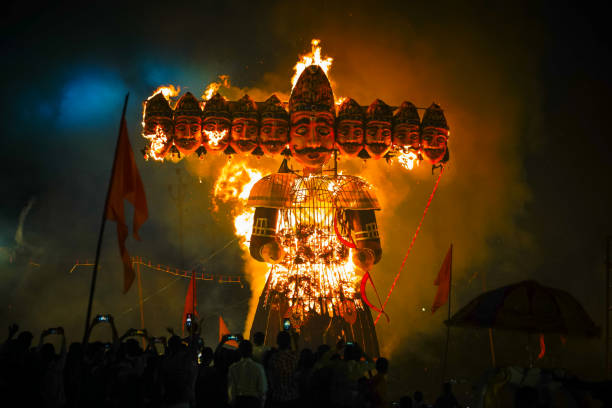
Dussehra, also known as Vijayadashami, is one of the most significant Hindu festivals celebrated across India, marking the victory of good over evil. The festival falls on the tenth day of the Navaratri festival and commemorates Lord Rama’s victory over the demon king Ravana, symbolizing the triumph of righteousness. In many parts of India, Dussehra is also associated with the goddess Durga’s victory over the buffalo demon Mahishasura, representing the power of feminine strength. The celebrations vary regionally — in North India, dramatic enactments of the Ramayana called Ramlila are performed, culminating in the burning of huge effigies of Ravana, Kumbhakarna, and Meghnath, symbolizing the destruction of evil. In South India, people celebrate with processions, worship rituals, and cultural performances. Homes and public spaces are often decorated with lights and flowers, while devotees offer prayers and share festive meals. Dussehra is not only a religious festival but also a cultural celebration that emphasizes morality, courage, devotion, and the ultimate victory of virtue over vice.
Dussehra